
Italy
One country, different views and experiences everywhere you look.
Italy is one of our favourite countries. Incredible food, stunning scenery and so much to see that you could visit so many times and still find something new. This guide covers our route from the lakes of the north to the Amalfi Coast, taking in Milan, Lake Como, Florence, Verona, Lake Garda, Venice, Sorrento and Rome. From our own experience to you, here is everything you need to know before you go.
We cover all of this and more on our YouTube channel. If you'd rather skip the planning, we can put together a bespoke Italy itinerary using our own experience of the country, making sure you make the most of your time and your budget.
Milan
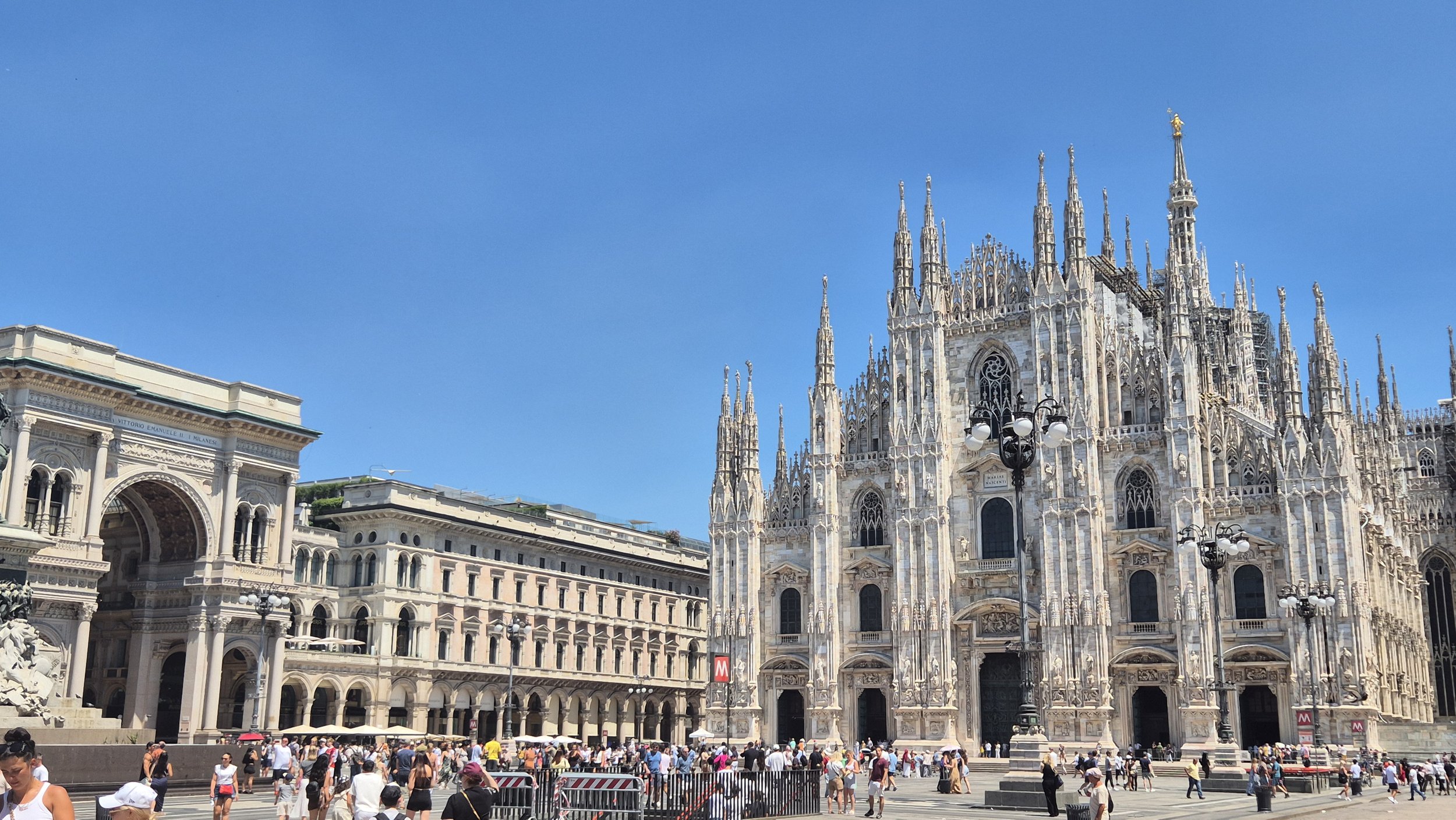
Most people visit Milan, see the Duomo and move on. We get it. But we think it's worth staying a night or two, because there is so much to see. Milan is also an ideal base for day trips. Venice, Verona, Lake Garda and Lake Como are all within an easy train journey and very manageable in a day. And if you arrive by train, Milano Centrale is a destination in itself. The station is absolutely stunning inside, one of the most beautiful in Europe.
The Duomo is spectacular and one of our favourite cathedrals in the world. Right beside it sits the Galleria Vittorio Emanuele II, one of the oldest and most beautiful covered shopping arcades in the world. The incredible mosaic floors, the gorgeous architecture and the beautiful light make it one of the most filmed locations in Italy. Well worth wandering through.
Our top things to see and do in Milan
- The Duomo, book in advance to climb to the rooftop terraces. The views across the city are spectacular and well worth the extra few euros.
- Galleria Vittorio Emanuele II, right next to the Duomo. No booking needed, just walk in and take it all in.
- A cooking class, one of the best things you can do in Milan. We recommend booking in advance as the popular ones fill up fast.
- The Fashion District, known as the Quadrilatero della Moda, just a short walk from the Duomo. From designer flagships to independent boutiques, there is something for every budget.
We've shortlisted our favourite things to do in Milan, including cooking classes, Duomo tours and guided city experiences.
Browse our handpicked Milan experiences →Milan has an excellent food scene and brilliant shopping across all budgets. One of the highlights of our trip was booking a cooking class, a fantastic way to spend a morning or evening and come away with skills you can take home. We learned how to make gnocchi and had unlimited wine, which was gorgeous.
Book your Gnocchi & Fresh Pasta Experience Here →If you're looking for a place to stay in Milan, why not consider The Corner Duomo Milano Hotel. We've put together a full hotel review from our visit.
Watch our Milan hotel review →What to eat
Lombardy is known for hearty, rich cooking. Look out for risotto alla Milanese, made with saffron and bone marrow, ossobuco (slow-braised veal shank), and cotoletta alla Milanese, the original breaded cutlet.
Lake Como
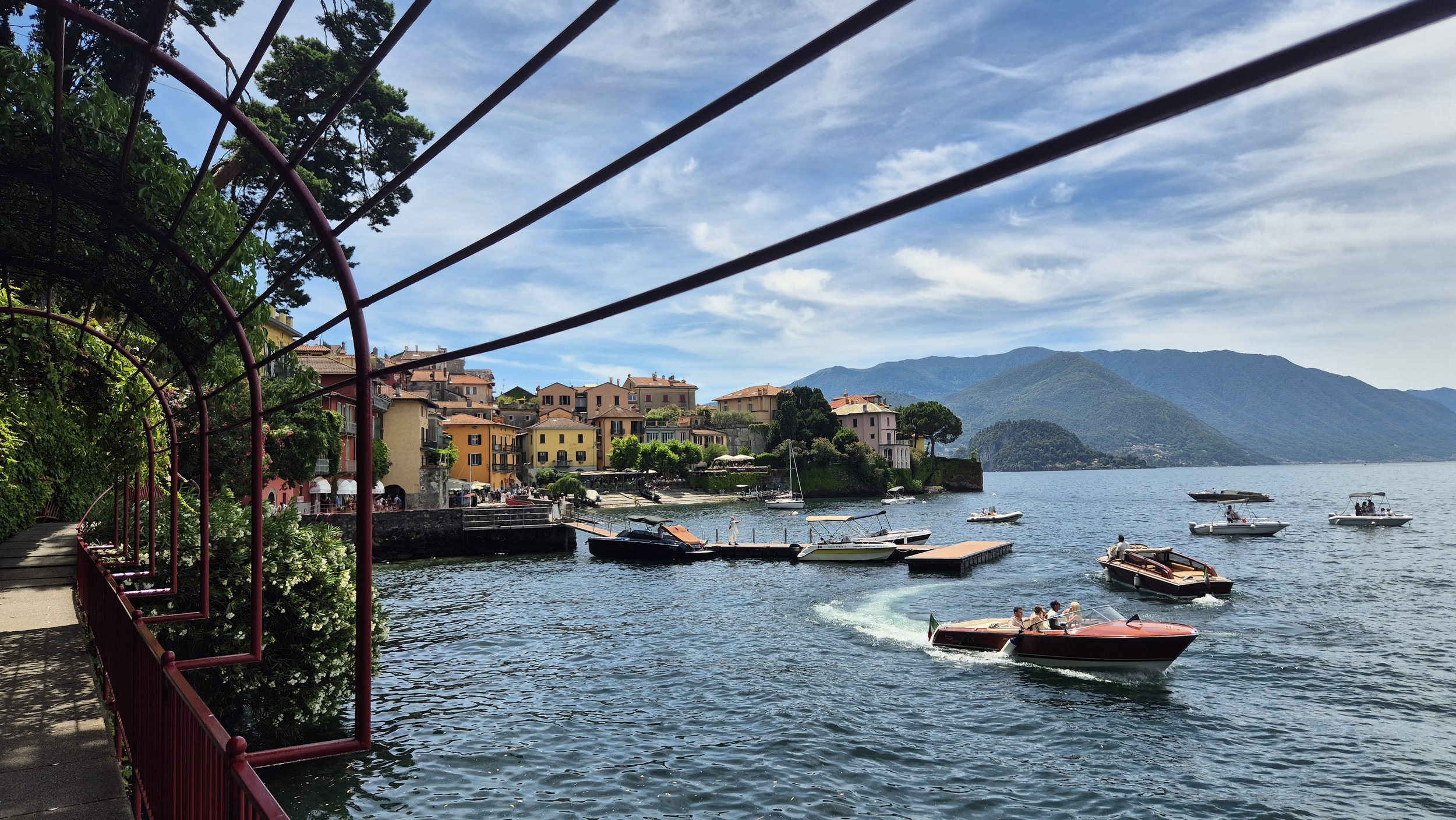
The train from Milan to Lake Como takes under an hour. You can catch a direct train from Milan Centrale to Como San Giovanni, which drops you right in Como town. Alternatively, take the train to Varenna, which sits in the middle of the lake on the eastern shore and is an excellent base for exploring the central section by ferry.
Lake Como can feel like a lot to navigate at first. It's boot-shaped, with dozens of lakeside towns to choose from. But you don't need to see all of them. The stretch you're really after is the central section of the lake, where Bellagio, Varenna and Menaggio form a triangle connected by regular ferries.
- Bellagio, the most famous town on the lake. Explore the cobbled streets, gardens and gorgeous views across the water. Easy to cover in a day.
- The ferry between Varenna, Bellagio and Menaggio, one of the best ways to spend a day on the lake. Buy a day pass and hop between all three.
- Villa del Balbianello, one of the most stunning lakeside villas in Italy and a famous film location. Worth checking opening times before you visit.
- The early morning bus from Como, catch it around 8am before the crowds arrive. Quieter, and a great way to start the day before switching to the ferry.
Bellagio and the lake towns
Bellagio is beautiful, and famous for good reason. The cobbled streets, the gardens and the gorgeous views across Lake Como and the surrounding areas make it one of the most photogenic spots on the water. It is also the most visited spot on the lake, which means the highest prices and the busiest piazzas. It's quite small and very easy to cover in a day. Consider basing yourself in Varenna or Como. Varenna is a little more beautiful than Como and puts you right in the heart of the lake.
Ferries run all day between the main towns. From Como town to Bellagio, the slower scenic ferry takes around two hours and stops at most of the lakeside villages. The hydrofoil does the same route in roughly 45 minutes. Once you're in the central area, short crossings between Bellagio, Varenna and Menaggio take just 15 to 20 minutes and run frequently throughout the day.
A day pass is worth buying if you plan to hop between more than two towns. It covers unlimited rides and means you can jump on whatever ferry turns up.
Avoid eating right on the lakefront in Bellagio. Prices jump significantly on the water's edge. Walk one or two streets back and you'll find better food at lower prices.
During the busier months of May to September the ferries fill up quickly. When we visited, we caught the early bus from Como at around 8am, which takes approximately one hour and twenty minutes and is quieter than the ferry at that time. We then caught the ferry back later in the day and also took the ferry between Varenna and Bellagio. Arriving early makes a real difference to how much you get to see in the lake.
Pisa & Florence
We have flown into Pisa on many occasions and it has generally been the cheaper option. The Leaning Tower is impressive in person and the surrounding Piazza dei Miracoli is worth an hour or two of your time. Get the iconic photo of you pretending to hold it up. It is not somewhere we'd recommend staying overnight though. As there isn't too much to see and Florence is more beautiful. If you're heading straight to Florence, take the Pisa Mover tram from the airport to Pisa Centrale (5 minutes) and catch the train to Florence. We've done this journey in under 45 minutes.
Florence
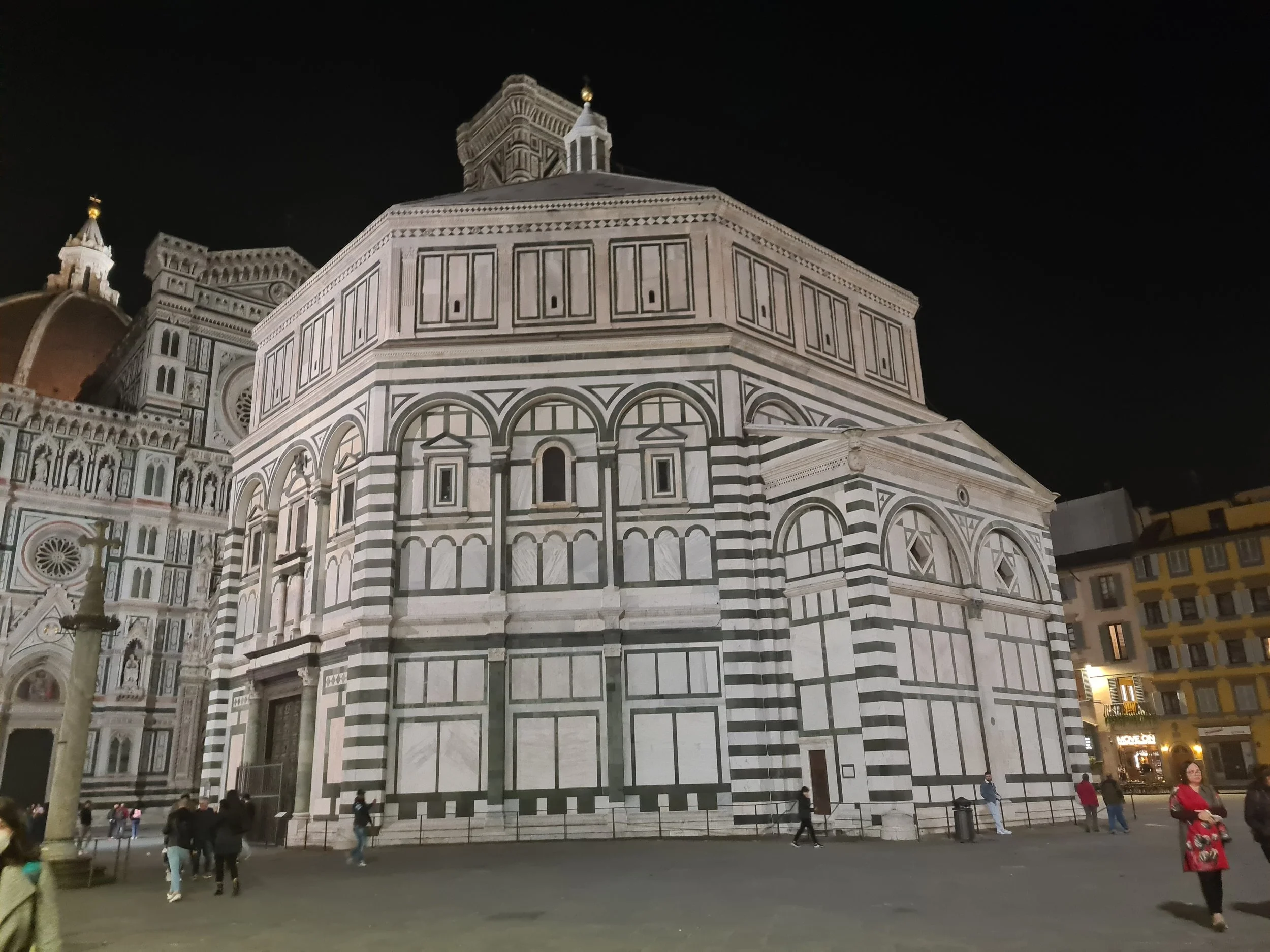
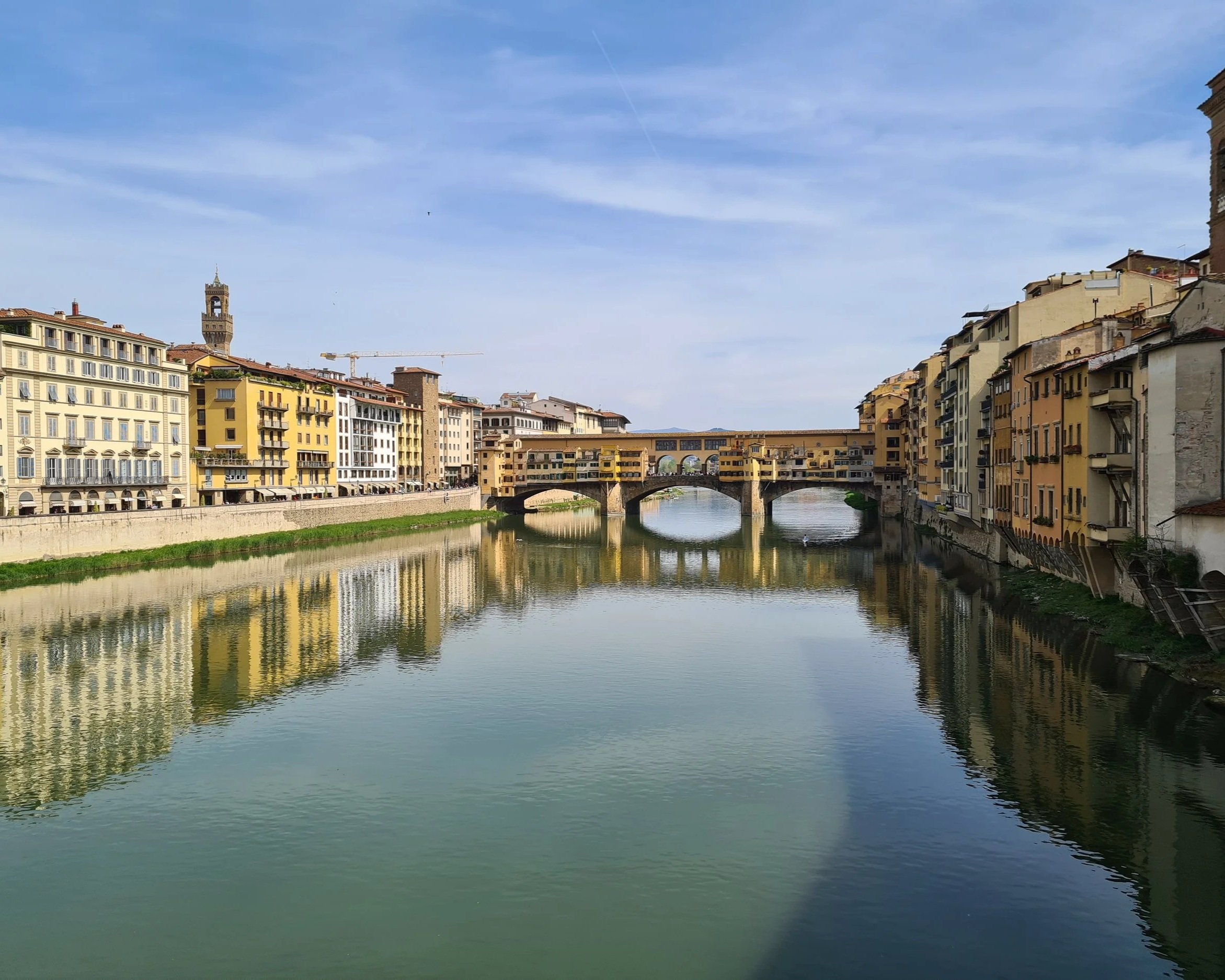
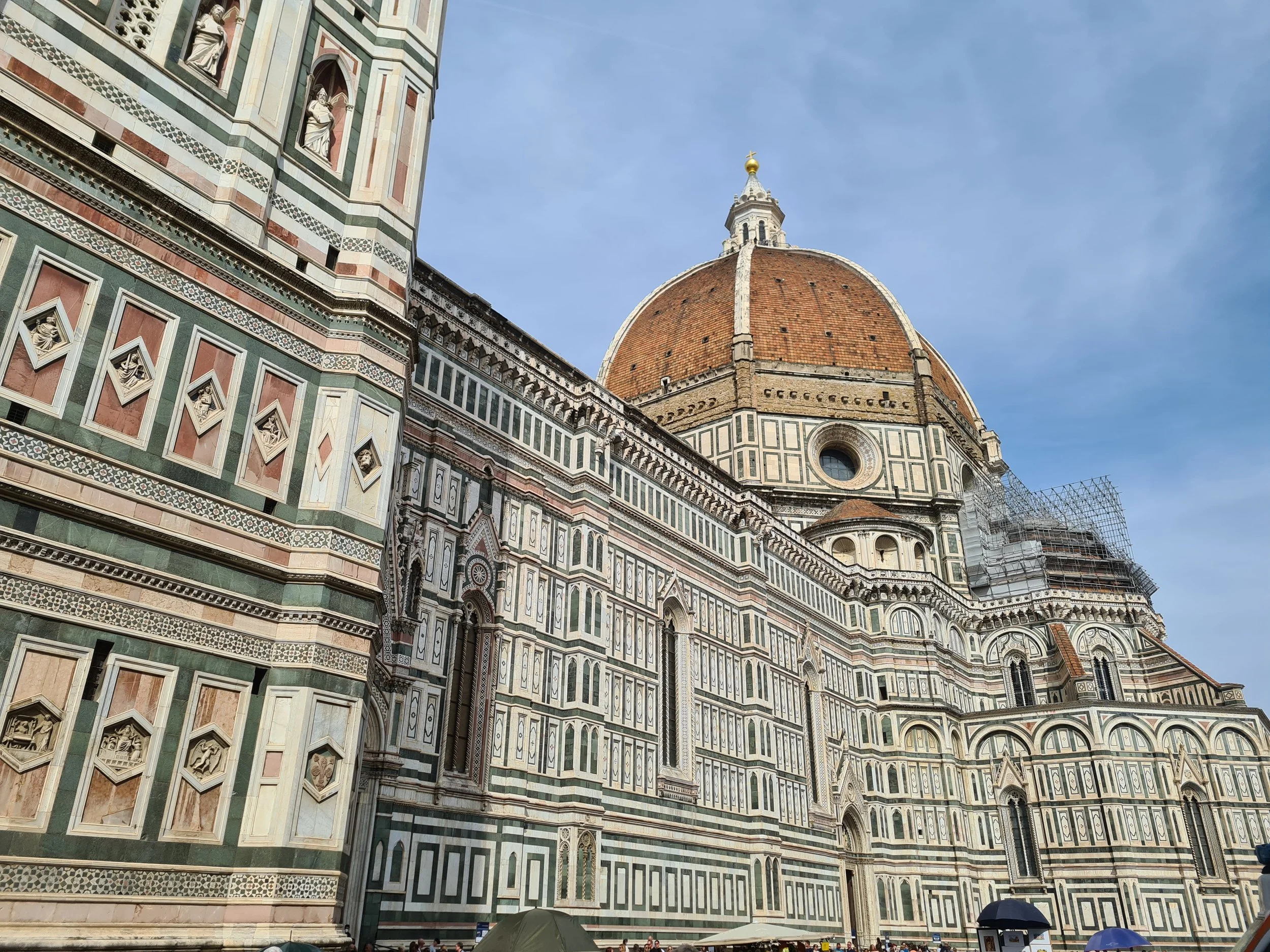
Florence is where you want to spend your time. There is so much to see. The Uffizi Gallery, Brunelleschi's Dome, the Ponte Vecchio (the beautiful medieval bridge crossing the Arno, lined with jewellers' shops), the leather markets in San Lorenzo, and the views from Piazzale Michelangelo across the whole city. Two full days gets you the highlights. Three gives you enough time to experience it all.
It's also one of Italy's most walkable cities. Most of what you want to see sits within a thirty-minute walk of the Duomo, which makes it very easy to explore.
- The Uffizi Gallery, one of the greatest art museums in the world. Book well in advance, queues without a ticket are long especially in summer.
- Brunelleschi's Dome, the view from the top of the Duomo is incredible. Book ahead as it can sell out.
- The Ponte Vecchio at night, the beautiful medieval bridge over the Arno is even more incredible after dark when there are less crowds. Free to visit.
- Mercato Centrale, a delicious covered food market close to the Duomo. Ground floor for fresh produce, upper floor for an incredible food hall. We went here on both nights of our stay because we loved it so much.
One of the most memorable things you can do in Florence costs nothing. The Duomo lit up after dark is absolutely incredible, and the streets around it are far quieter in the evening.
What to eat
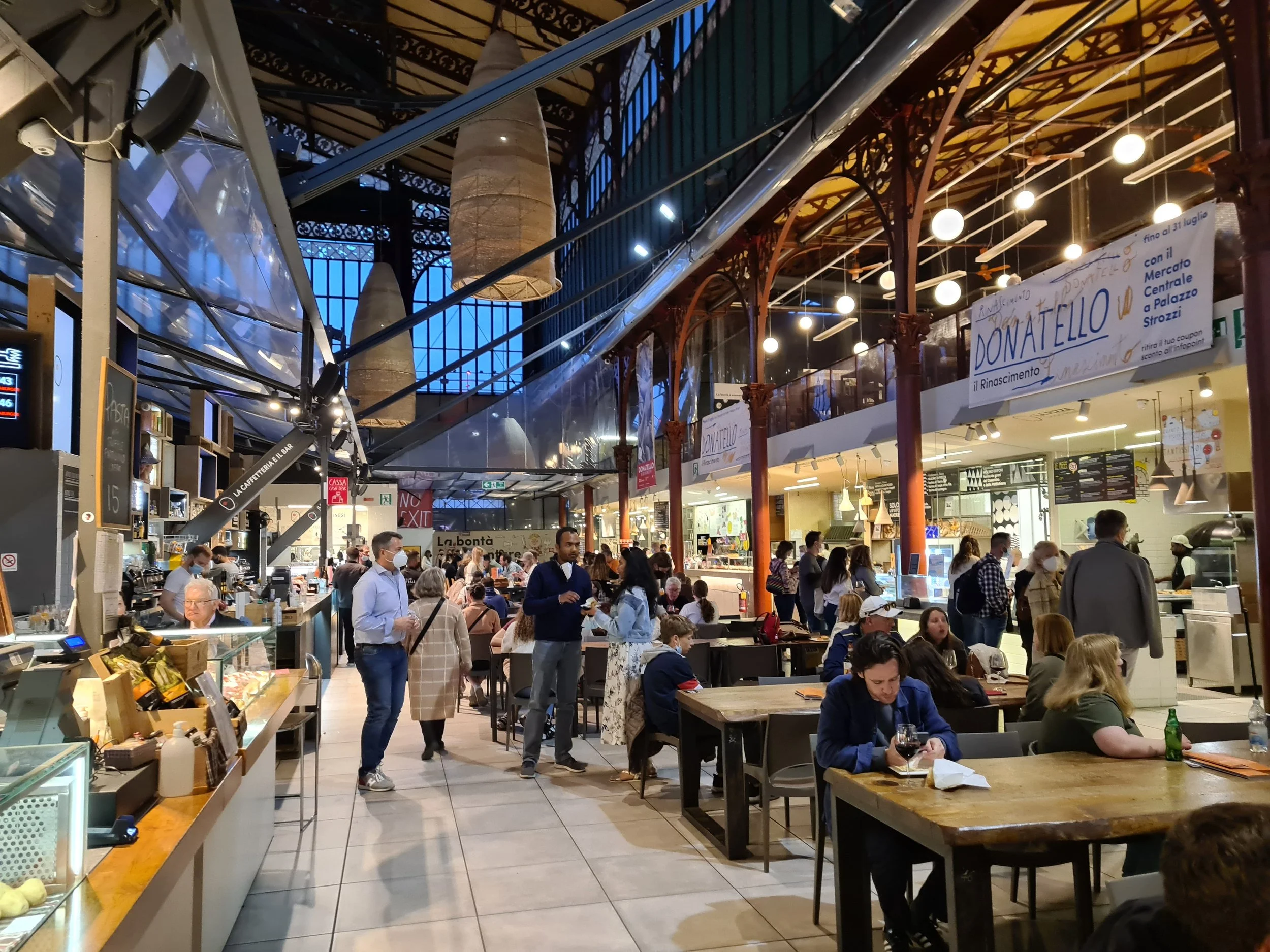
Tuscany is one of Italy's most famous food regions. Look for bistecca alla Fiorentina, a thick-cut T-bone steak cooked over charcoal and served rare, ribollita (a hearty bread and vegetable soup), pappardelle with wild boar ragu, and cantucci biscuits dipped in Vin Santo. Chianti is the local wine and pairs with almost everything.
And if you love truffles, Tuscany is one of the best places in the world to eat them. The region is famous for both white truffles from San Miniato and black truffles from the Crete Senesi area. You'll find truffle pasta, truffle oil and fresh shaved truffle on menus across Florence, at prices far lower than most other parts of Europe. I had the best truffle pasta of my life at Mercato Centrale.
Verona & Lake Garda
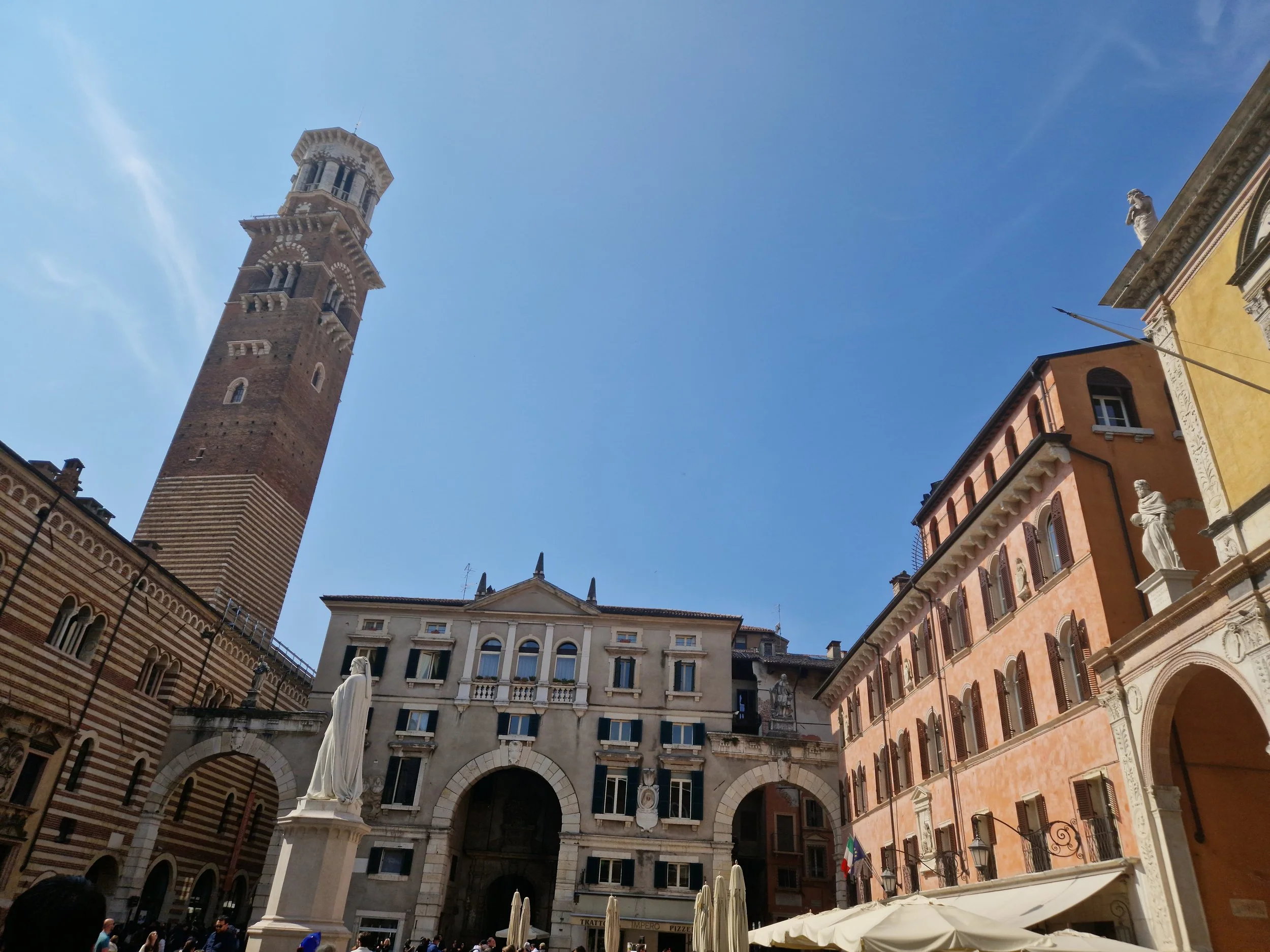
Verona is one of those Italian cities that consistently surprises people. It's easy to dismiss as just the Romeo and Juliet backdrop, but it has a beautiful historic centre, including the Roman Arena, the piazzas and the Adige river curling around the old town, and it sits in a part of Italy that gives you excellent options for a day out.
- The Roman Arena in Verona, one of the best preserved Roman amphitheatres in the world and still used for opera performances today. We recommend booking a show in advance.
- Sirmione and its medieval castle, our favourite town on the lake. The Roman ruins, clear water and a stunning castle right in the centre.
- A vineyard tour from Verona, the city sits at the heart of the Valpolicella and Soave wine regions. We recommend booking in advance as the popular ones fill quickly.
- Boat trips on Lake Garda, Sirmione offers small boat trips around the lake which are a great way to see the shoreline and enjoy the clear water up close.
Lake Garda from Verona
The most obvious day trip from Verona is Lake Garda, and it really is close by. Italy's largest lake is just a short train ride away and well worth a full day of your time.
The train from Verona Porta Nuova drops you at Desenzano del Garda, where the main station is. If you are on a budget, Desenzano is actually more budget friendly for accommodation than any of the other towns on Lake Garda, making it a good base if you want to keep costs down. That said, our favourite town on the lake was Sirmione. The Roman ruins, clear water and a beautiful medieval castle right in the town make it a stunning place to spend the day. Sirmione also offers boat trips around the lake, which are great fun in a small boat, and there are plenty of lakefront restaurants with incredible views. Do bear in mind they are on the pricier side.
When we visited, we caught the bus from Verona to Sirmione, which took around one hour and twenty minutes, and then got the train back from Desenzano. We arrived back in Verona for dinner in the evening, where there are far more options and it is much more affordable than in the lakeside towns. When you are in Verona, you can also go on loads of vineyard tours, which are really fun.
Regular trains run from Verona Porta Nuova to Desenzano del Garda, taking around 20 minutes. From Desenzano, ferries connect you to Sirmione, Lazise, Bardolino and further north up the lake. Alternatively, buses run directly from Verona to Sirmione and take around one hour and twenty minutes. Check the seasonal timetable before you go, as ferry frequency drops outside summer.
What to eat
Verona sits at the heart of the Valpolicella and Soave wine regions. The wines are excellent. For food, look for pasta e fagioli (pasta with beans), risotto all'Amarone made with the region's famous rich red wine, and pandoro, the tall golden cake that originated in Verona. Around Lake Garda, fresh lake fish including trout, tench and perch feature heavily on most menus.
Venice
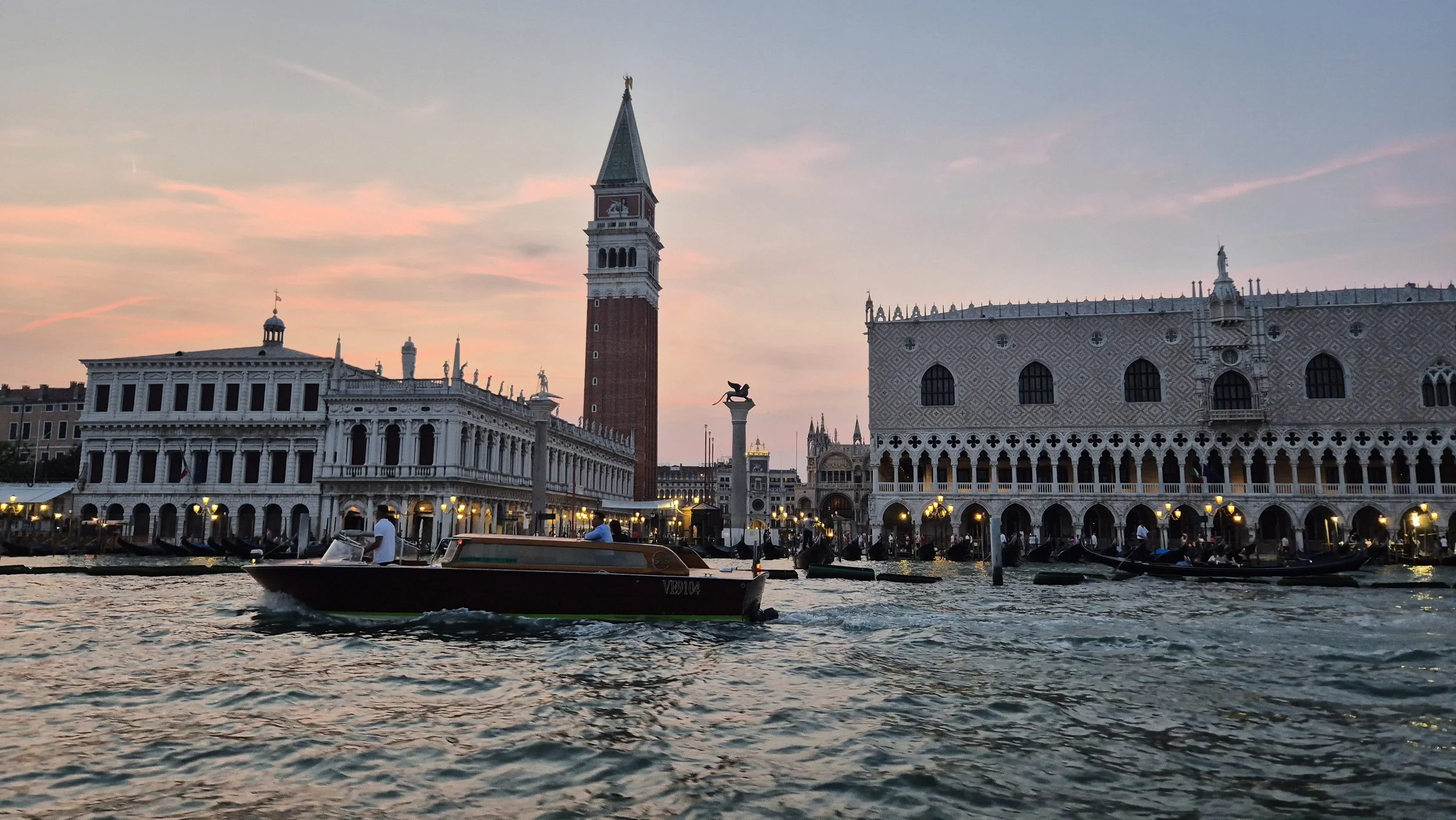
Venice is one of our favourite places in Italy offering gorgeous views everywhere you look.
The area around St Mark's Square is extraordinary. The Basilica, the Doge's Palace, the view across the lagoon. Every time we have stayed close to St Mark's Square it has been incredible. It is by far the most crowded and most expensive corner of the city, but if your budget allows, staying nearby means everything is on your doorstep.
We Stayed at the Palazzo Paruta & Wellness Suites. We found the hotel to be unique and affordable. Watch our Venice hotel review →- St Mark's Basilica and Square, best experienced early morning before the crowds arrive. We recommend booking entry in advance to skip the queue.
- A gondola ride, an absolute must do in Venice. We recommend a private gondola and spending a little more for a personal experience. Book in advance and go in the early evening when the light on the canals is at its best.
- The Grand Canal by vaporetto, the waterbus gives you the full sweep of the city from the water for just a few euros. Line 1 is the slow scenic route and worth every minute.
- Cicchetti bar hopping through the back alleys, step off the main routes and find the narrow alleys and tiny bacari bars. Order cicchetti and a glass of wine and do it all over again. This is the real Venice.
- Getting a water taxi (a wooden speedboat), we caught it from the airport which is so much fun.
Not following a map is the right strategy in Venice. The tourist crowds die down in the evening, and it all becomes magical at night. Step off the main route between the train station and St Mark's Square and the streets become very thin alleys with their own quiet charm.
What to eat
Venice has its own distinct food culture, quite different from the rest of northern Italy. The tradition to know is cicchetti, small bar snacks served in the city's bacari (traditional wine bars). Think baccalà mantecato (creamed salt cod on bread), sarde in saor (sweet and sour sardines), and small plates of cured meats and cheese. For a proper meal, risotto al nero di seppia (squid ink risotto) is a Venetian classic. And the Aperol Spritz was invented here, so it's a must try.
The Amalfi Coast
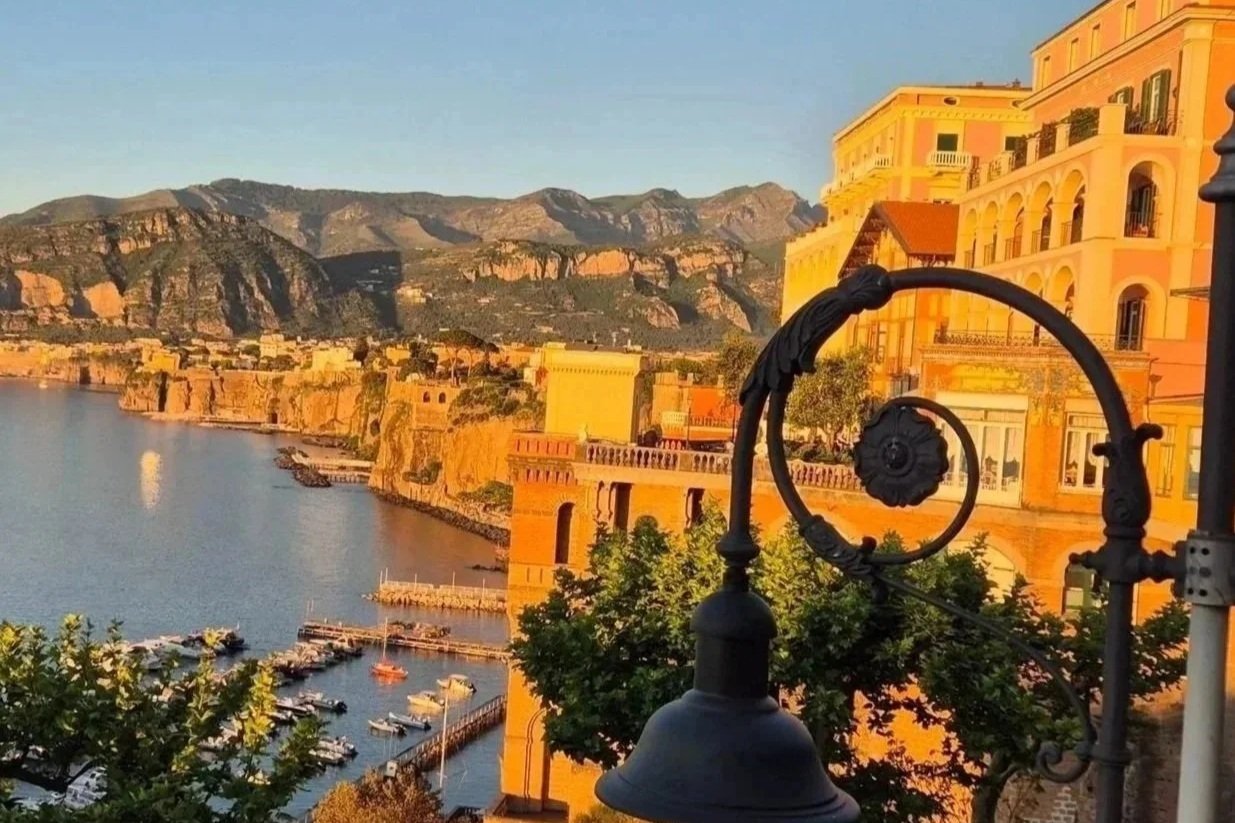
The Amalfi Coast is one of the most gorgeous coastlines in Europe, with sheer cliffs, terraced lemon groves and pastel-coloured towns hanging above the clear blue sea. The roads are narrow, they get very busy in summer, and some of the most famous towns can be expensive to sleep in, which we found.
Flying in via Naples
Most people will fly into Naples, which is the nearest airport to the Amalfi Coast. From Naples Airport you can reach the coast by train, taxi, ferry or bus directly. Naples Port also has ferries that run directly to various points along the Amalfi Coast, which is a stunning way to arrive. Naples itself is more affordable than the coast, but we would not recommend staying there. It has a reputation for being less safe than other parts of Italy and is not somewhere we would base ourselves.
Why Sorrento should be your base
Sorrento sits at the northern tip of the peninsula and should be used as your base. It is easy to reach by train from Naples and gives you access to most of the surrounding Amalfi towns, as well as Capri Island and easy access to Pompeii. It's a proper town with a real atmosphere in the evenings, and you will see loads of lemon shops and stalls everywhere you turn.
From Sorrento you can reach Capri by ferry (around 25 minutes), take the Circumvesuviana train directly to Pompeii (30 minutes), and explore Marina Grande and the clifftop park overlooking the town.
Where we stayed
We enjoyed staying at the Palazzo Martinelli
Watch our Palazzo Martinelli hotel review →Here are a couple of other hotels to also consider:
Grand Hotel Excelsior Vittoria- Capri Island, take the ferry from Sorrento, around 25 minutes. We did a small boat tour covering all around the island, which was one of the best things we did on the whole trip. We recommend booking the Blue Grotto in advance.
- Pompeii, one of the most remarkable sites in Italy. Jump on the Circumvesuviana train from Sorrento and you are there in 30 minutes. We recommend skip-the-line tickets before you go.
- Marina Grande, the original fishing harbour below Sorrento town, completely different in character to the clifftop above and well worth the walk down.
- The clifftop park overlooking Sorrento, Villa Comunale park sits right on the cliff edge and gives you one of the best views of the Bay of Naples. Free to enter and beautiful at sunset.
We have put together our favourite tours and experiences around Sorrento and the Amalfi Coast.
Browse our handpicked Sorrento experiences →The Circumvesuviana train runs from Naples Centrale to Sorrento roughly every 30 minutes throughout the day. The journey takes about 70 minutes and stops at Pompeii Scavi, meaning you can do Pompeii as a straightforward day trip on the same line. For a more comfortable ride with guaranteed seating, the Campania Express runs the same route with air conditioning and luggage space, worth it if you are travelling in summer with bags.
Sorrento has its own dedicated travel guide.
Watch our Sorrento YouTube Travel Guide →What to eat
Naples is the birthplace of pizza, and Neapolitan pizza here is unlike anything you will find anywhere else. Thin, slightly charred bases with San Marzano tomatoes and fior di latte mozzarella. Beyond pizza, the region is known for mozzarella di bufala, fresh pasta dishes like spaghetti alle vongole (clams), and an abundance of fresh seafood. In Sorrento specifically, the local lemons are exceptional and used in everything. Limoncello made from Sorrento lemons is a must try and worth bringing home.
Rome
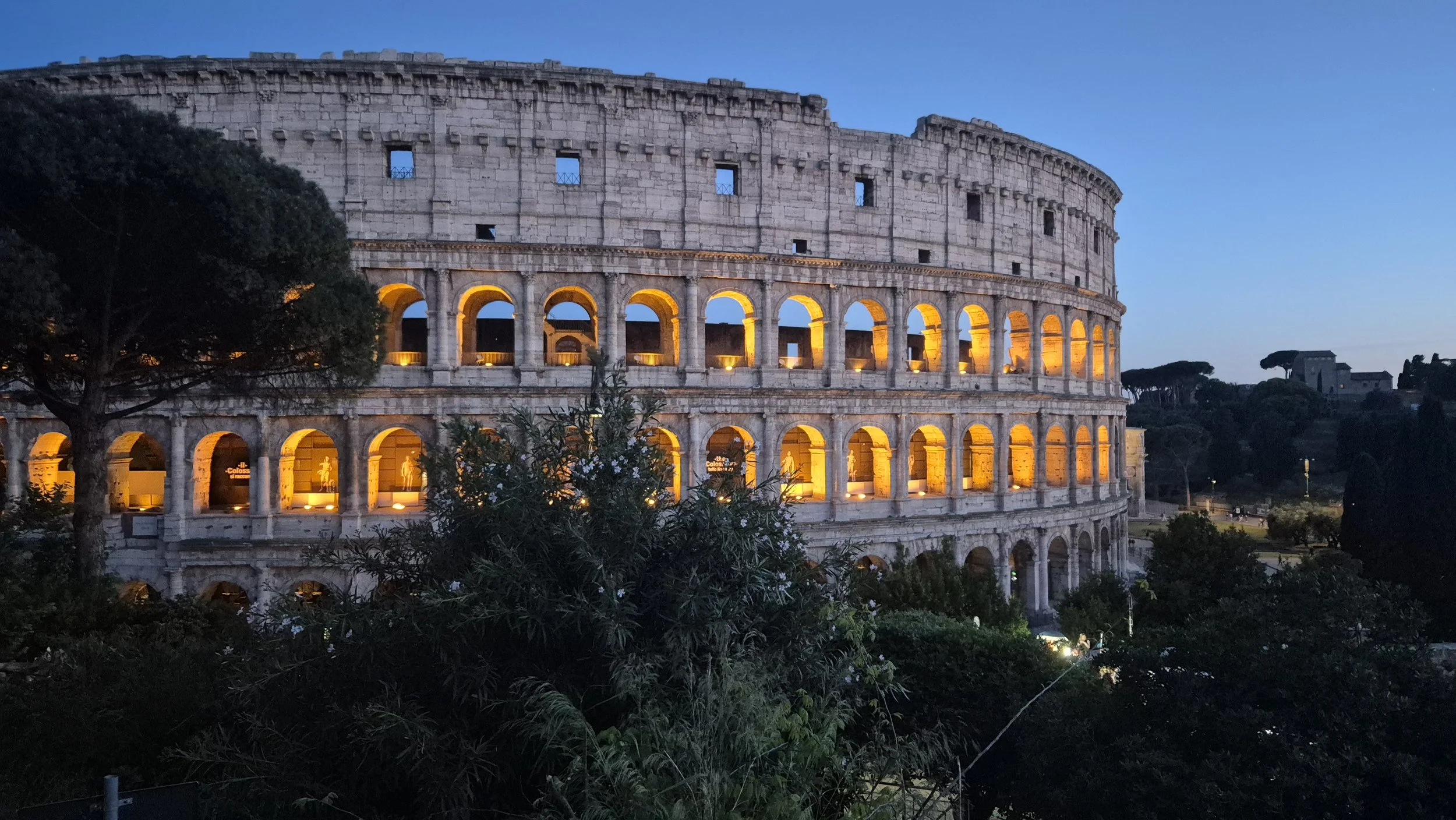
Rome is one of the most incredible cities in Italy, and one we have visited three times. There is nothing quite like wandering around the city and seeing thousands of years of history next to each other, where every corner you turn there is a Roman temple embedded in a church or a Renaissance fountain sitting in the middle of a neighbourhood that still feels entirely local.
We would recommend more than four nights if you can manage it. A three night stay, means you'll be rushed to see the majority of Rome. Four to five nights actually lets you take it all in and gives you plenty of time to really explore. The Vatican alone can take a full day, and it is just a couple of stops on the metro.
- The Colosseum and Roman Forum, book well in advance. These together can easily fill a full day and are unlike anything else in the world.
- The Vatican Museums and Sistine Chapel, just a couple of stops on the metro. Allow a full day and book tickets before you go.
- The Pantheon, one of the best-preserved Roman buildings you will ever see. We arrived for opening time and had it almost to ourselves.
- A tuk tuk tour at sunset, one of our favourite things across three visits to Rome. We seen more in 3 hours than we could in 2 days, going all across the city in daylight and at night. We recommend booking in advance as spots go quickly.
Where to stay
We always recommend staying in Monti, or within a 15-minute walk of the Trevi Fountain, as this keeps you central and within easy reach of everything. We have done a full hotel review from our stay in Rome, location was brilliant and a 12-minute walk to the Spanish Steps.
We Stayed at Hotel Imperiale by OMNIA hotels. This hotel was only an 11 minute walk to the Trevi Fountain, and a 30 minute walk to the Colosseum. Watch our Rome hotel review →Across our three visits to Rome we have included our favourite things to do, from Colosseum skip-the-line tours to food experiences and sunset tuk tuks.
Browse our handpicked Rome experiences →How to pace it
The Colosseum, Roman Forum, Vatican Museums and Sistine Chapel all require advance booking and will take most of a full day each. If you try to combine them, you will exhaust yourself.
From Rome Fiumicino Airport, the Leonardo Express train runs directly into Roma Termini in around 32 minutes, every 15 minutes. It is the quickest and most straightforward way. There is also a metro system within Rome useful for getting around the city.
What to eat
Roman cooking is simple, ingredient-led and delicious. The four pasta dishes you need to know are cacio e pepe (pecorino and black pepper), carbonara (egg, guanciale and pecorino), amatriciana (tomato, guanciale and pecorino) and gricia, the ancestor of all of them. For the most traditional eating experience, head to Monti, one of Rome's oldest neighbourhoods and by far our favourite area to eat. It is more affordable than other parts of Rome. Beyond pasta, try supplì (fried rice balls with mozzarella) and carciofi alla Romana (slow-cooked artichokes).
If it has towering multicoloured mounds in the window, it is not real gelato. We always use TripAdvisor to find the best rated gelato shops when we are in Italy, and it has never let us down. Look for places where the gelato is stored flat in metal containers with lids. That is the real thing.
Italy: Your Questions Answered
The questions people ask us most, and search for most online, when planning a trip to Italy.
When is the best time to visit Italy?
Spring (April to June) and early autumn (September to October) are when we prefer to visit. The weather is good, the main sights are busy but manageable, and prices are more reasonable than peak summer. July and August in Rome and on the Amalfi Coast can be extremely hot and very crowded. For the lakes, May and June give you the best combination of good weather and quieter ferries.
How far in advance should I book attractions in Italy?
As soon as you book your trip, check availability on the attractions you want to visit straight away. Some are bookable up to twelve months in advance and it is worth looking early. We always make sure our attractions are booked at least a month before we travel to give ourselves the best chance of getting everything we want at the times that work for us.
How many days do I need to see Italy properly?
It depends on how much you want to cover. Italy is bigger than most people expect and travelling between cities takes time. For a single city, three to four nights works well. Rome needs four to five days to do it properly. The Vatican can easily take a full day on its own and the Colosseum is a good half day, so factor that in before you try to squeeze too much in.
What are the best Italy itineraries to consider?
Milan works brilliantly as a starting point because most of northern Italy is within an hour to an hour and a half by train. From Milan you can reach Lake Como in under an hour, Verona in just over an hour, and Venice in around two and a half hours. Combining Milan and Lake Como makes for a beautiful few days in the north. We have also flown into Pisa, done Florence, and then travelled across to Venice in the same trip, which works really well. You could also do Verona and Lake Garda combined with Venice. If you love lakes, Lake Garda, Lake Maggiore and Lake Como can all be done in one trip. Florence and Pisa work well together as a Tuscany base, and Rome connects south to Naples and then Sorrento for the Amalfi Coast.
What is the best base for exploring the Amalfi Coast?
Sorrento. It is easily accessible from Naples by train and the rest of the Amalfi Coast is easily reachable from there by public transport. It is also cheaper than the more expensive areas like Positano or Ravello. We spent three nights in Sorrento, covered everything we wanted to do, and got around easily by train and public transport throughout. You will find more about how we approached it in the blog.
Is Venice worth staying in rather than visiting as a day trip?
Yes, and two nights is the perfect amount of time. The main perk of staying is being able to enjoy it properly, going out on the water on a boat, walking along the canals and down the alleys at your own pace. It is definitely more enjoyable once the day crowds have left and the city quietens down. It is one of my favourite places in Italy and somewhere I could go again and again.
What is the best way to get between Italian cities?
Trains are the best option. Italy's rail network connects all the major cities and is reliable and affordable when you book in advance. From Milan you can reach Florence in around two hours and Rome in three. For the Amalfi Coast, the Circumvesuviana regional train runs from Naples to Sorrento in about 70 minutes and also stops directly at Pompeii, which makes it very easy to combine as a day trip.
What Italian food should I make sure I try?
Every region has its own specialities, which is part of what makes eating around Italy so good. In Rome, cacio e pepe, carbonara and supplì are the ones to go for. In Florence, bistecca alla Fiorentina and truffle pasta, particularly at Mercato Centrale where I had the best truffle pasta of my life. In Venice, cicchetti at a bacaro bar. On the Amalfi Coast, the pizza and mozzarella di bufala are in a different league to anywhere else. Limoncello from Sorrento is the real thing and worth bringing home.
What do we wish we had known before visiting Italy?
That it is much bigger than it looks on a map. Travelling between cities takes time, and trying to fit in too many places in too few days means you rush everywhere. We would give ourselves more time in Rome in particular. Four to five nights is what it actually needs, not three. The Vatican alone is a full day and it is further from the centre than most people expect.
What is worth adding to an Italy itinerary if you have more time?
Verona surprised us more than anywhere else on the route. It is often skipped but it has a really cool historic centre, the Roman Arena is incredible, and the Juliet balcony from Romeo and Juliet is right there in the city. It also sits right by Lake Garda, which is an easy day trip of around 40 minutes to an hour on the bus. If we were planning a trip again we would stay in Verona again, it is a really nice city.
Let's Build Your Itinerary
Want an Italy itinerary built around your own dates and pace? We put together bespoke itineraries covering everywhere in this guide and more.
Get your itinerary →See it for yourself
See Italy for yourself on the Travelling Pandas channel, from hotel reviews to full destination guides.
Italy Travel Series →A quick note on links, some of the links on this page are affiliate links. If you book or buy through them, we may earn a small commission, at no extra cost to you. We only share links to places, products, and experiences we have personally used or tried and tested.